Virginia’s highest court is at the center of a pivotal constitutional showdown. The Virginia Supreme Court is now deciding whether to block a voter-approved congressional redistricting plan that appears to benefit Democratic candidates—despite being backed by a statewide referendum. This decision strikes at the heart of democracy, election integrity, and the balance of power between judicial authority and popular will.
The stakes are high. The outcome could reshape Virginia’s congressional delegation for a decade, influence national House control, and set a precedent for how courts handle citizen-led redistricting reforms.
A Voter Mandate Meets Judicial Review
In 2020, Virginia voters approved a constitutional amendment creating an independent redistricting commission tasked with drawing fair legislative and congressional maps. The goal was to end partisan gerrymandering—a long-standing issue in Virginia’s political landscape. But when the commission deadlocked along party lines, responsibility defaulted to the Virginia Supreme Court, which selected a map submitted by special masters.
Later, in 2023, after new elections shifted the political makeup of the state legislature, a revised congressional map was developed—one that was more favorable to Democrats. This map was then submitted to voters through a referendum process and passed with majority support.
That should have been the end of the story. But it wasn’t.
Opponents, primarily Republican lawmakers and conservative advocacy groups, challenged the map in court, arguing it violates constitutional requirements for compactness, contiguity, and respect for political subdivisions. They claim the map splits too many cities and counties, undermining community representation.
Now, the Virginia Supreme Court—traditionally seen as conservative-leaning—must decide whether to uphold the will of the voters or invalidate the map based on technical and constitutional grounds.
The Legal Argument: Process vs. Partisan Outcome
At the core of the case is a tension between procedural compliance and political consequence.
Plaintiffs argue that the map illegally divides communities, particularly in Northern Virginia, Richmond, and Hampton Roads. For example, the current map splits the city of Suffolk across three different districts, diluting coherent regional representation. Similarly, parts of Chesterfield County are carved into multiple districts, stretching from Richmond to the outer edges of metro D.C.
"The map disrupts natural communities of interest," said one attorney representing the challengers during oral arguments. "Just because voters approve a plan doesn’t mean it meets constitutional standards."
Defenders of the map counter that the redistricting process followed all required steps. The plan was developed by a bipartisan commission (even if gridlocked), reviewed by demographers and legal experts, and ultimately ratified directly by Virginia’s electorate.
"Voters don’t just have a voice—they have authority," argued counsel for the state board of elections. "The constitution allows them to affirm or reject maps. They did so clearly in this case."
Yet critics point out a deeper irony: a reform meant to reduce partisanship may have enabled a partisan outcome through democratic means. The approved map would likely yield 6 Democratic seats and 5 Republican seats in Virginia’s 11-district delegation—despite the state’s near-even partisan split.
Judicial Precedent and Political Implications
Virginia’s Supreme Court has historically taken a hands-off approach to political questions, but redistricting cases have forced it into the spotlight.
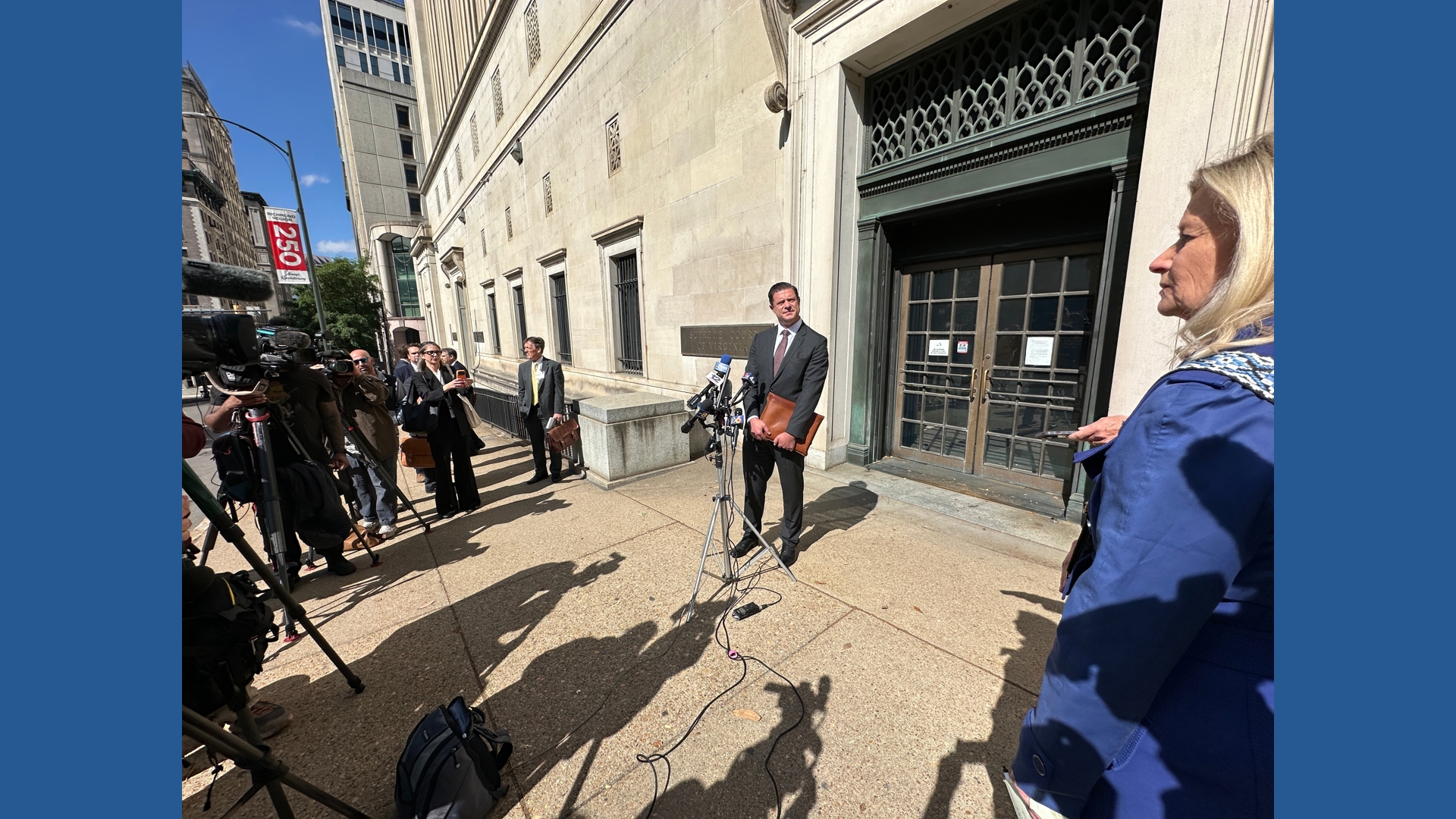
In 2021, the court struck down a previous legislative map for similar reasons—excessive splitting of cities and counties—after it was drawn entirely by the General Assembly without commission input. That decision was widely seen as a win for nonpartisan process.
Now, the court faces a more complex dilemma: a map that followed the new constitutional process, survived public review, and won voter approval—yet still exhibits signs of partisan advantage.
Legal scholars note that this case could redefine the court’s role.
“If the court blocks a voter-approved map, it risks being seen as overriding democracy,” said Dr. Elena Morris, a constitutional law professor at UVA. “But if it allows a map that clearly favors one party, it undermines the redistricting reform’s original intent.”
What makes this particularly delicate is timing. The 2024 elections are approaching, and delaying a final decision could disrupt candidate filings, campaign planning, and voter education. The court may feel pressure to rule swiftly, even as justices weigh long-term implications.
What a Blocked Map Would Mean
Should the Virginia Supreme Court block the current map, several scenarios unfold—none of them simple.
First, the court could revert to the 2021 special master map, which was court-drawn and slightly more balanced. But that map is outdated due to population shifts and local government objections.
Second, the court could appoint new special masters to draft an emergency plan. But with filing deadlines looming, time is short.
Third, the legislature could attempt to draw a new map. But with partisan divisions still sharp, deadlock is likely.
Each path risks legal delays, confusion for voters, and accusations of judicial overreach.
One Northern Virginia county election official put it bluntly: “We need clarity by March. If we get a last-minute change, poll books, ballots, and voter guides all have to be redone. It’s a logistical nightmare.”
The National Ripple Effect
Virginia’s case is being watched far beyond state borders.
As one of the few states to adopt a citizen-led redistricting model through constitutional amendment, Virginia is a test case for whether such reforms can survive judicial scrutiny when they produce politically skewed outcomes.
“If Virginia’s Supreme Court blocks a voter-approved map, it sends a message that even democratic processes can be overturned on technical grounds,” said David Tran, a redistricting analyst with the Campaign Legal Center. “That could discourage similar reforms in other states.”
Conversely, upholding the map could embolden other states to pursue citizen initiatives that override legislative gridlock—even if the result favors one party.
The U.S. House of Representatives is expected to be decided by a handful of seats in 2024. Virginia’s delegation could play a decisive role. A Democratic tilt in Virginia might offset Republican gains elsewhere, making this more than a local issue.
Common Pitfalls in Redistricting Reform
Virginia’s ongoing struggle reveals several recurring problems in redistricting efforts:

- Over-reliance on commissions: Even bipartisan commissions can deadlock, pushing responsibility back to courts or legislatures.
- Voter referendums as end-runs: While empowering, referendums can legitimize maps with structural flaws if voters lack detailed understanding.
- Judicial inconsistency: Courts may apply standards unevenly—stricter when one party draws maps, more lenient when the process appears neutral.
- Timeline pressure: Legal challenges near election cycles create chaos for election administrators.
- Misunderstanding "fairness": A map can be legally compliant but still politically unbalanced due to demographic clustering.
For instance, much of the Democratic advantage in the current map stems not from deliberate manipulation but from how Democratic voters are concentrated in urban centers like Richmond, Norfolk, and Arlington. Drawing compact districts naturally clusters those areas, making surrounding districts more Republican.
This “geographic inefficiency” is a well-documented phenomenon—but it doesn’t make the outcome feel fair to losing parties.
A Path Forward: Balancing Process and Equity
What Virginia needs isn’t just a map—it’s a sustainable redistricting system.
One solution gaining traction among reformers is the use of algorithmic transparency. By requiring all proposed maps to be generated using open-source software with publicly documented criteria (compactness, minority representation, county integrity), the process becomes more auditable and less prone to suspicion.
Virginia could also adopt a ranked-choice approach to map approval. Instead of a single commission or court decision, multiple maps could be scored against neutral metrics, and the highest-scoring plan automatically adopted—unless overridden by supermajority vote.
Finally, setting earlier legal deadlines would prevent last-minute litigation from destabilizing elections.
None of these fixes are perfect. But they offer a way to reduce the perception of bias—whether real or imagined.
The Decision Looms
The Virginia Supreme Court’s ruling could come at any moment.
If it upholds the voter-approved map, it affirms the people’s role in shaping democracy—even when the outcome leans partisan.
If it blocks the map, it reinforces technical and constitutional standards—but risks appearing to subvert the will of the electorate.
Either way, the decision will shape not only Virginia’s political future but also the national conversation about who gets to draw the lines of power.
For voters, candidates, and civic leaders, the message is clear: engage early, understand the process, and demand transparency. Redistricting isn’t just a technical exercise—it’s a foundational act of democracy.
Frequently Asked Questions
Why is the Virginia Supreme Court involved in drawing election maps? When the bipartisan redistricting commission failed to agree on a plan, the Virginia Constitution gave the Supreme Court authority to appoint special masters to draw the maps.
Did voters really approve a map favoring Democrats? Yes. In a 2023 referendum, Virginia voters ratified a congressional map that, based on current voting patterns, would likely elect more Democrats than Republicans.
Can a court override a voter-approved constitutional decision? Yes, if the court finds the measure violates other parts of the constitution, such as requirements for district compactness or respect for local boundaries.
How does this affect the 2024 elections? Delays or changes in the map could disrupt candidate filing, campaign strategies, and voter information—if not resolved by early spring.
What makes a district "gerrymandered"? A district may be considered gerrymandered if it is oddly shaped to favor one party, splits communities without justification, or dilutes the voting power of specific groups.
Could this case go to the U.S. Supreme Court? Potentially. If state constitutional issues are intertwined with federal voting rights claims, the loser might appeal to the U.S. Supreme Court.
What’s the difference between state legislative and congressional maps? State legislative maps determine representation in Virginia’s General Assembly; congressional maps determine the state’s delegation to the U.S. House of Representatives. Both were affected by the redistricting reform.
FAQ
What should you look for in Virginia Supreme Court Weighs Fate of Democratic-Favored House Map? Focus on relevance, practical value, and how well the solution matches real user intent.
Is Virginia Supreme Court Weighs Fate of Democratic-Favored House Map suitable for beginners? That depends on the workflow, but a clear step-by-step approach usually makes it easier to start.
How do you compare options around Virginia Supreme Court Weighs Fate of Democratic-Favored House Map? Compare features, trust signals, limitations, pricing, and ease of implementation.
What mistakes should you avoid? Avoid generic choices, weak validation, and decisions based only on marketing claims.
What is the next best step? Shortlist the most relevant options, validate them quickly, and refine from real-world results.